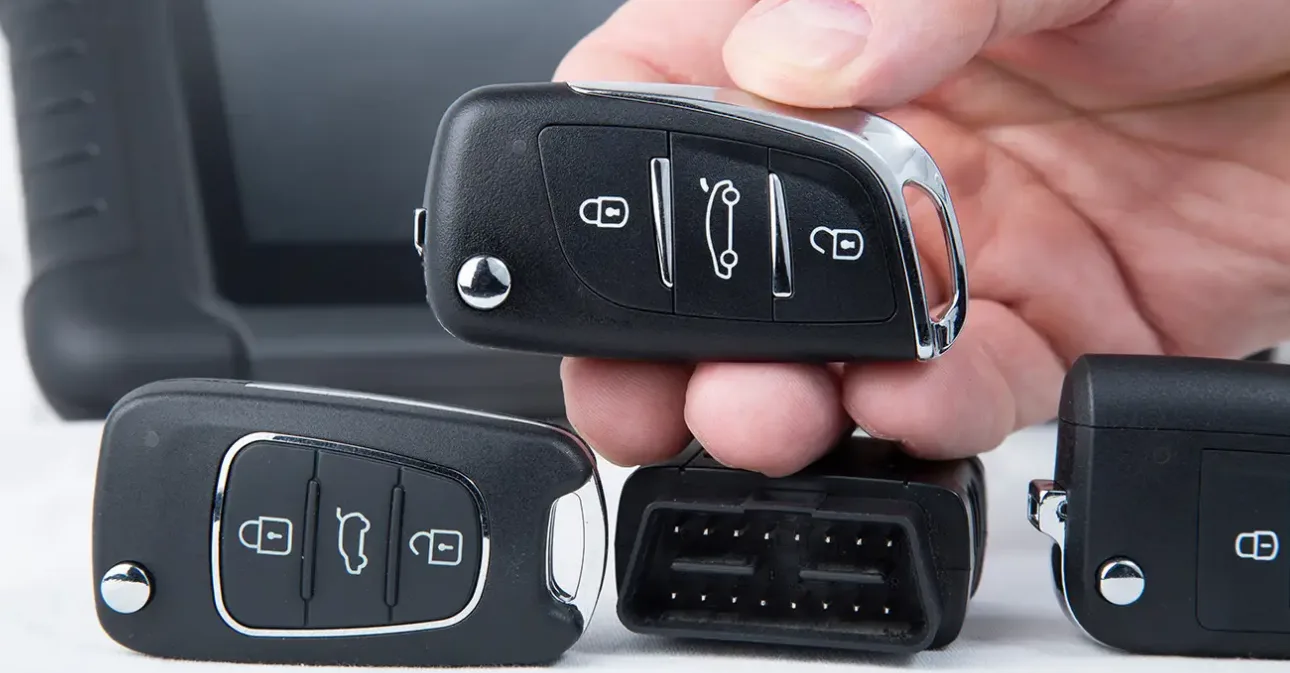
A transponder key has a microchip inside the plastic head that communicates with your car's immobilizer. When you turn the key (or press start), the car sends a signal to the chip. If the chip responds with the correct code, the engine starts. Without the correct chip, the engine cranks but won't fire. This system has cut car theft in half since the late 1990s.
How Does a Transponder Key Actually Work?
Your car and your key have a secret handshake. Here's how it works, step by step. When you insert the key and turn the ignition (or bring a proximity fob near the start button), an antenna ring around the ignition cylinder sends a low-frequency radio signal to the chip inside the key.
The chip receives that signal, processes it using its stored encryption algorithm, and sends back a response code. The car's Engine Control Module (ECM) checks that response against its stored key database. If it matches, the ECM allows the fuel injectors and ignition system to fire. If it doesn't match, the engine cranks but won't start.
The whole exchange takes about 100 milliseconds. You never notice it. But without that chip, your car is a 4,000-pound paperweight.
When Did Cars Start Using Transponder Keys?
The late 1990s, and it changed everything. According to the National Insurance Crime Bureau (NICB), vehicle theft dropped approximately 50% after transponder immobilizer systems became standard. Before transponders, a thief could hotwire most cars in under 60 seconds. After transponders, hotwiring became nearly impossible because the engine won't run without the correct chip signal.
By 2000, most major manufacturers had adopted transponder technology. Today, roughly 95% of vehicles on the road have some form of transponder or proximity immobilizer system.
What Types of Transponder Chips Exist?
Several generations, each with increasing security. The main chip families are:
- Texas Instruments 4C/4D: The earliest and simplest. Fixed code. Found on 1996-2010 era vehicles. Relatively easy to clone.
- Philips/NXP 46: Used by many Asian and American brands. Crypto transponder with rolling codes. Common on 2005-2015 vehicles.
- Philips/NXP 49 (Hitag Pro): AES-128 encryption. Current generation on many 2015+ vehicles. Significantly harder to clone.
- Philips/NXP 8A (Hitag AES): Newest generation. Found on 2018+ Toyota, Hyundai, Kia, and others. Requires advanced equipment to program.
- Megamos 48: Used primarily by VW/Audi group. Unique crypto algorithm.
- Toyota G and H chips: Toyota-specific transponders with proprietary encryption.
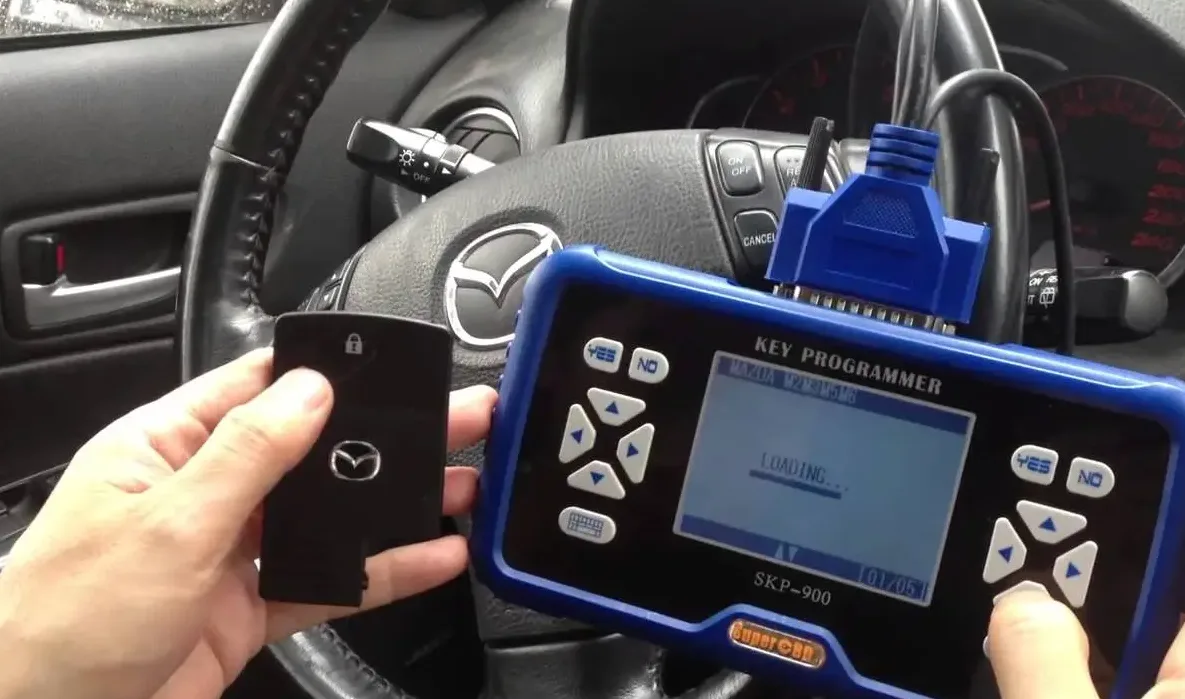
Each chip type requires different programming equipment and procedures. That's why a locksmith needs to know your exact vehicle year, make, and model before arriving. We carry programming equipment for all major chip types.
What's the Difference Between a Transponder Key and a Smart Key?
A transponder key inserts into the ignition. A smart key stays in your pocket. Both use chips to communicate with the car. But a transponder key requires physical insertion and turning (or at least proximity to the ignition ring). A smart key uses proximity detection. When the fob is within a few feet of the car, the doors unlock automatically. Press the start button and the engine fires.
Smart keys are effectively the next evolution of transponder keys. The underlying principle (encrypted radio communication between key and car) is the same. The user experience is just more hands-free.
What Happens When a Transponder Key Fails?
Three common failure modes. The chip dies (rare but it happens after 10+ years). The chip gets desynced from the car's immobilizer (usually after a battery disconnect or electrical issue). Or the chip gets damaged physically (dropped in water, run over, etc.).
Symptoms are always the same: the key turns the ignition (or the start button works), the engine cranks, but it won't actually fire and run. The security light on the dashboard usually stays on or blinks. That light is the car telling you the transponder authentication failed.
We can diagnose and fix all three failure modes on-site. Usually it's a reprogramming, which takes 20-40 minutes. If the chip is physically dead, we replace the key entirely.